Florilux averii
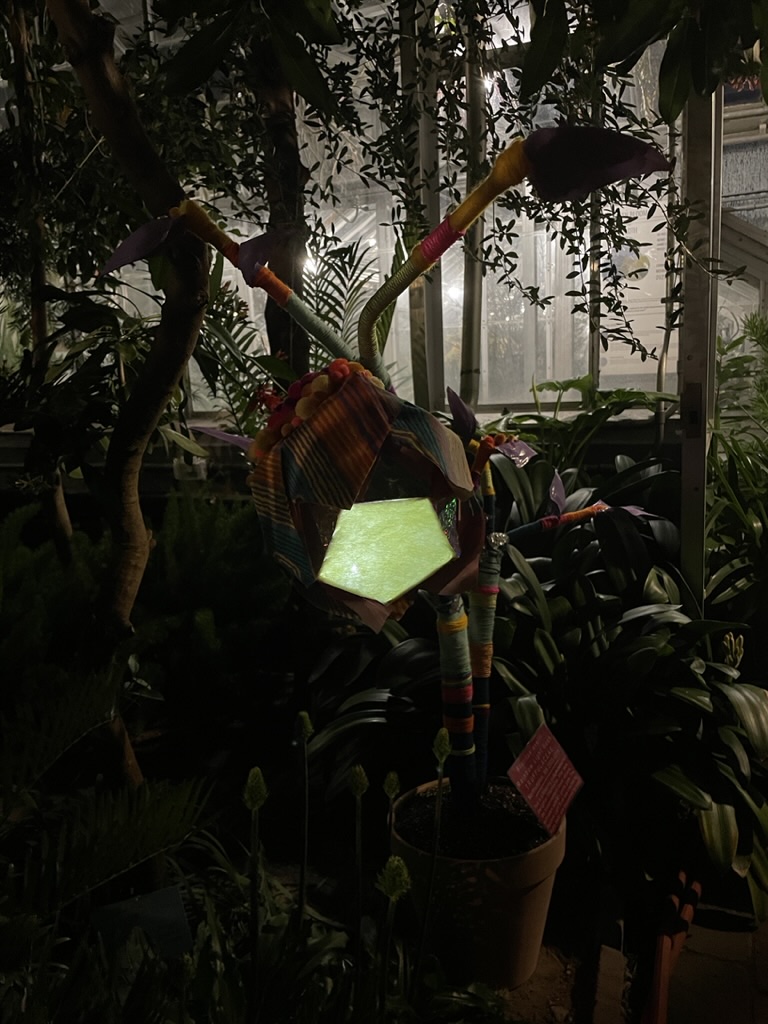
2023, site-specific installation
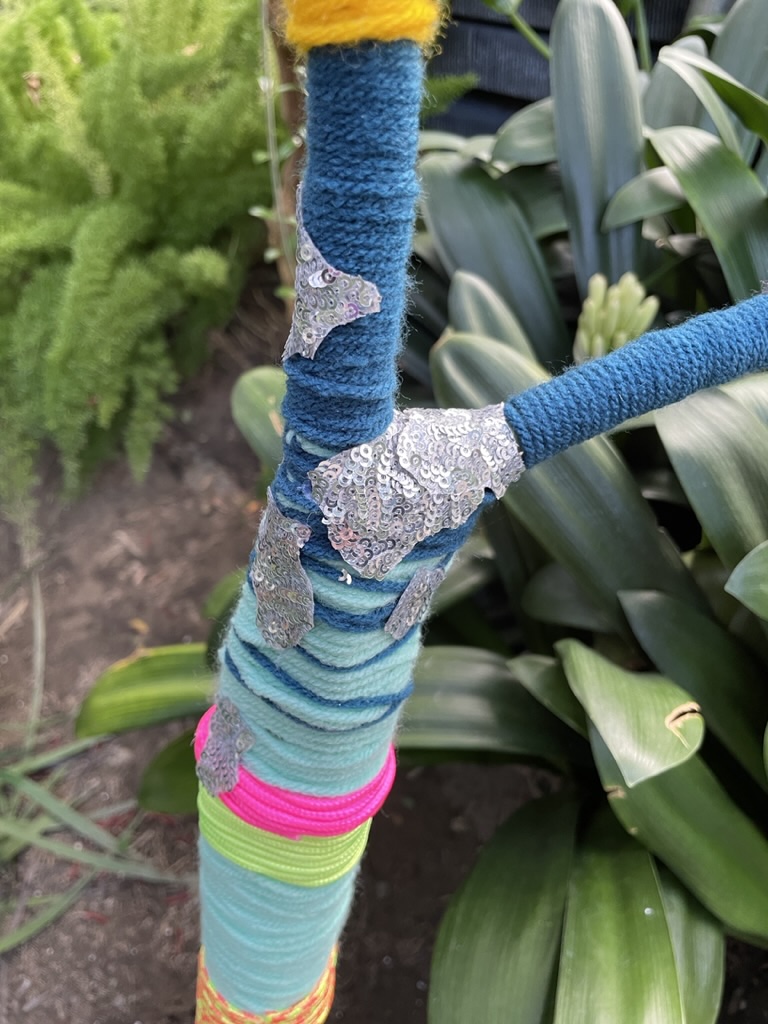
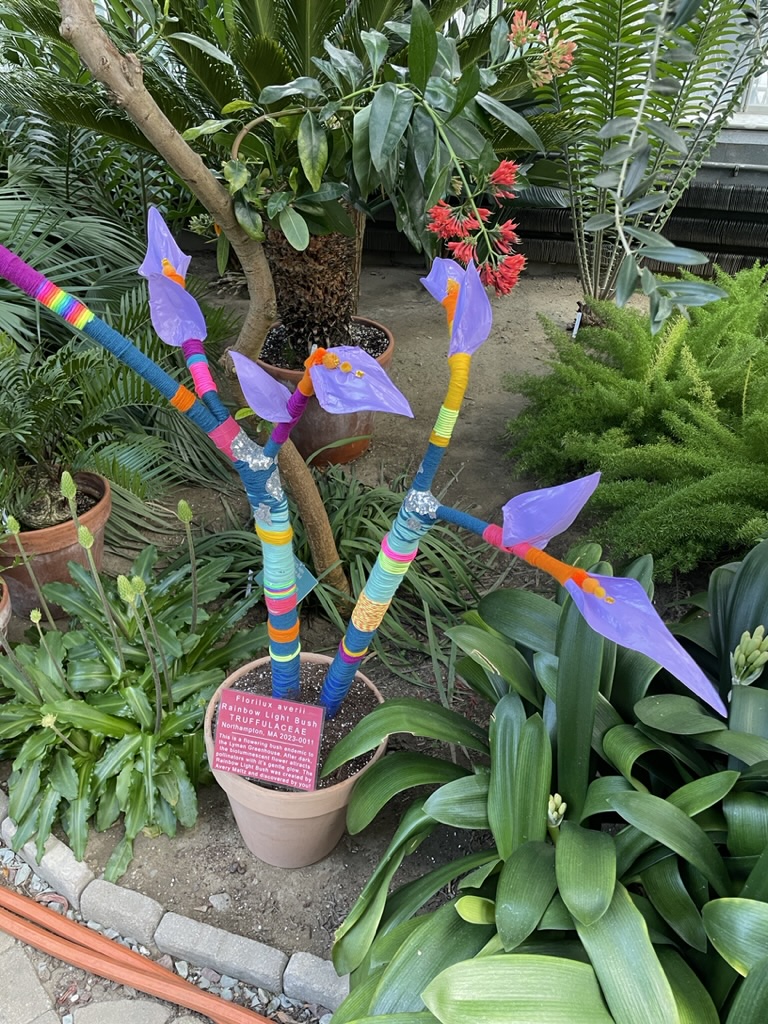
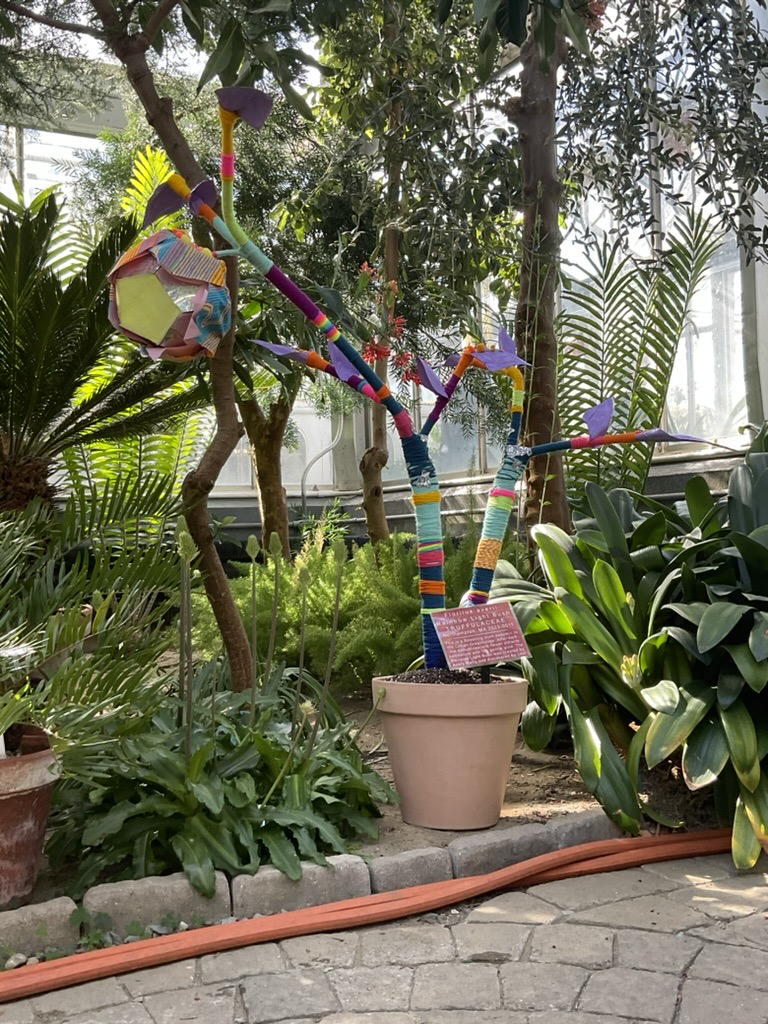
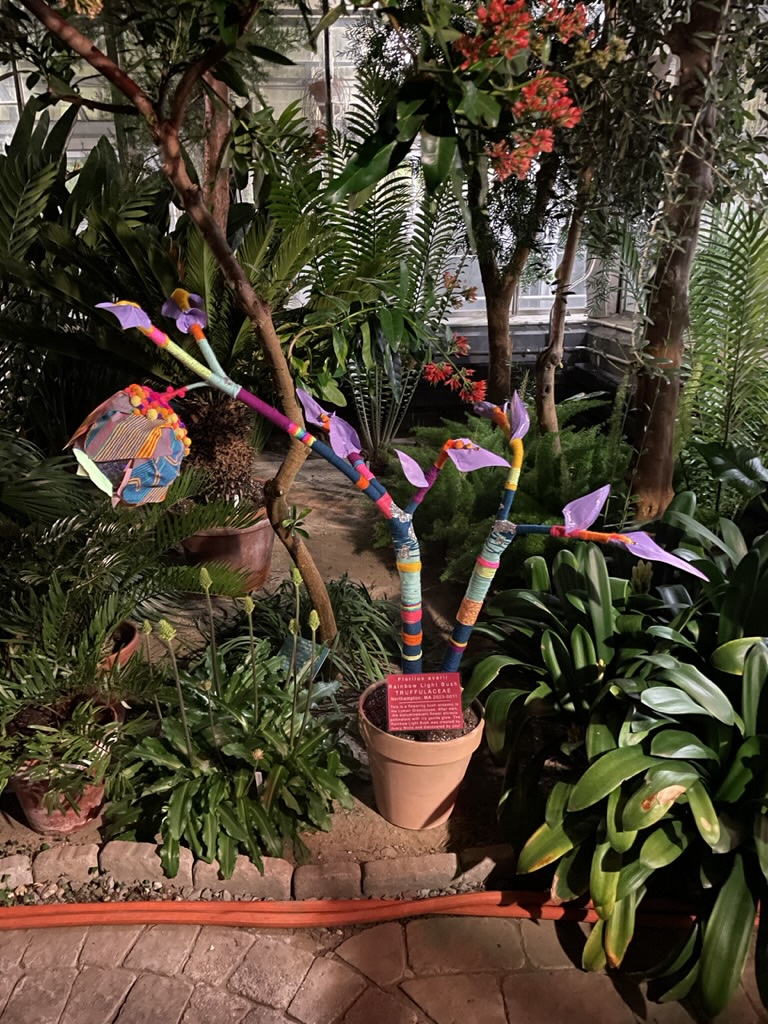
Fabric, yarn, pompoms, rhinestones, sequins, paper, wire, paint, nightlight, soil, clay pot
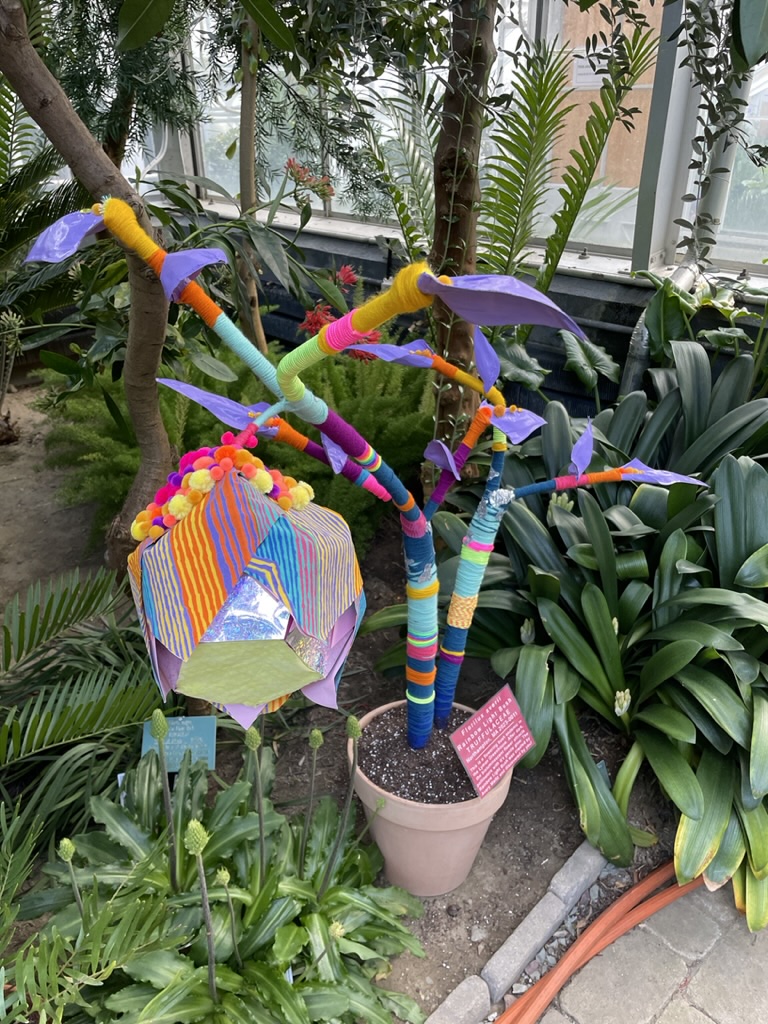
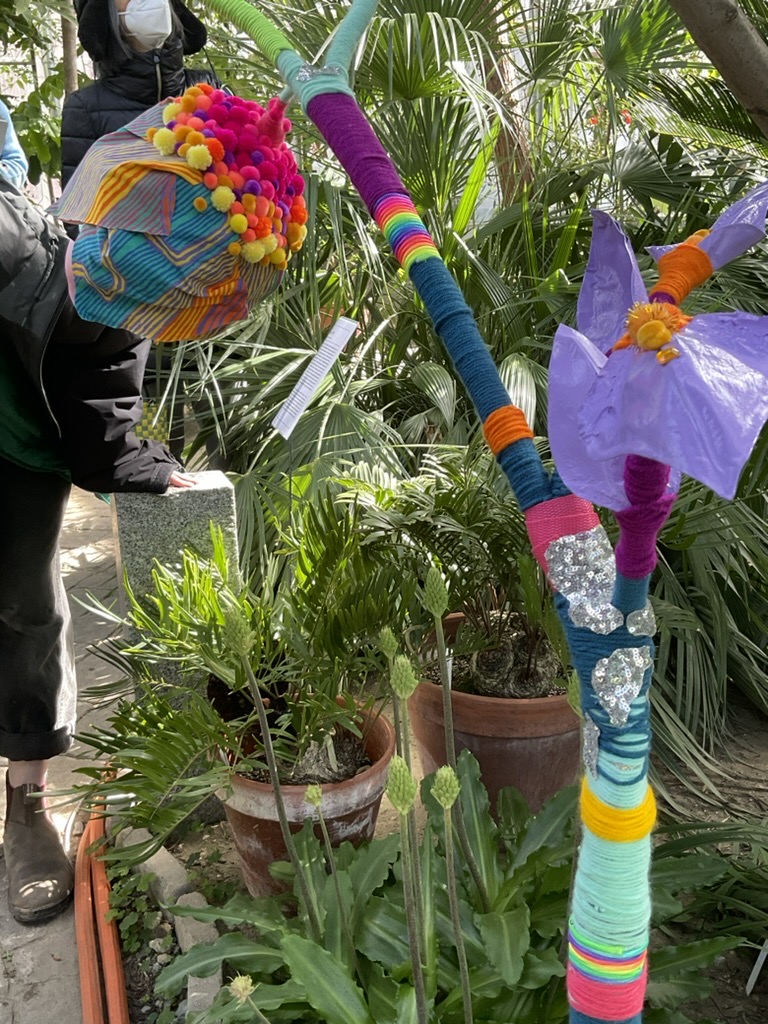
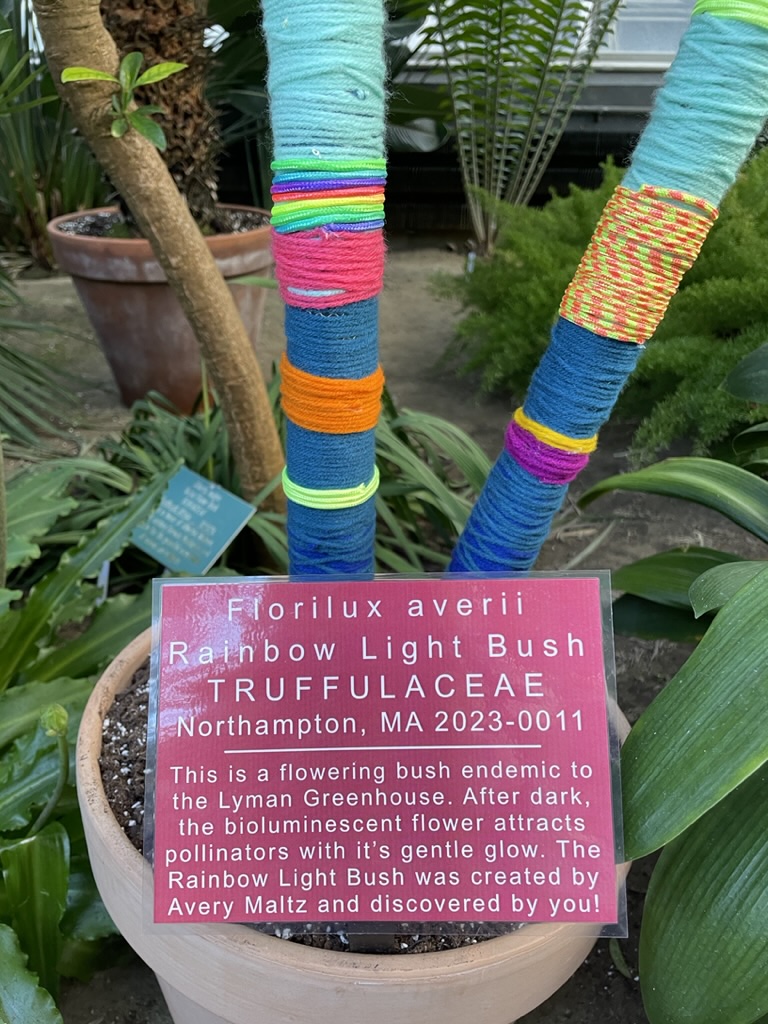
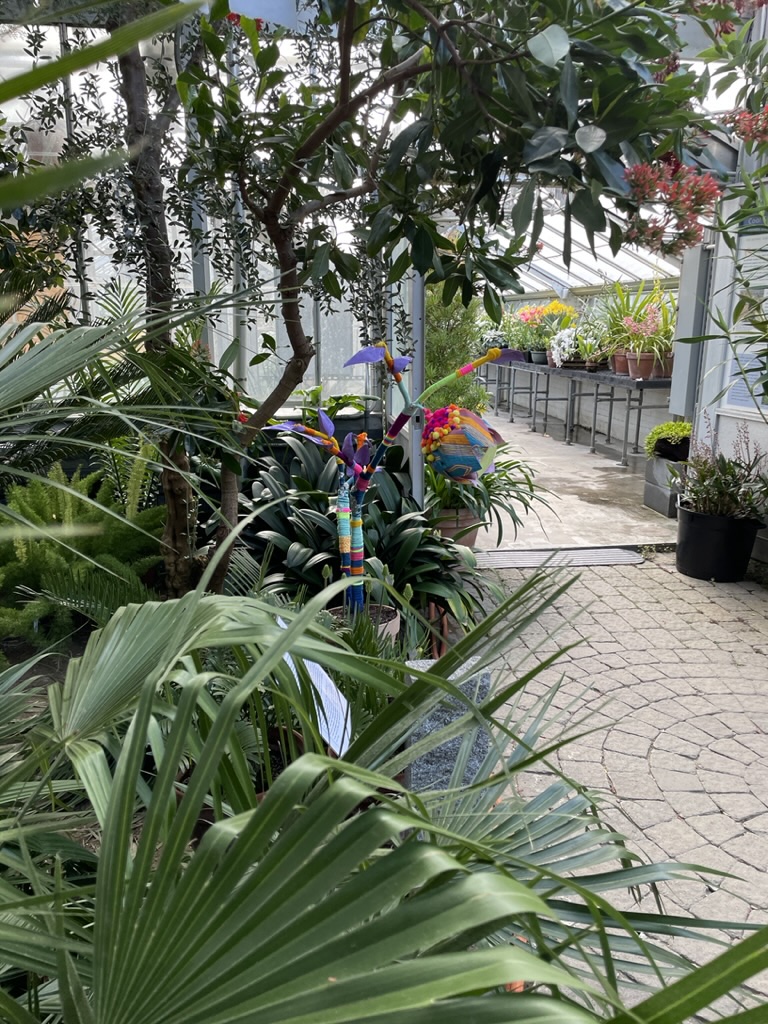
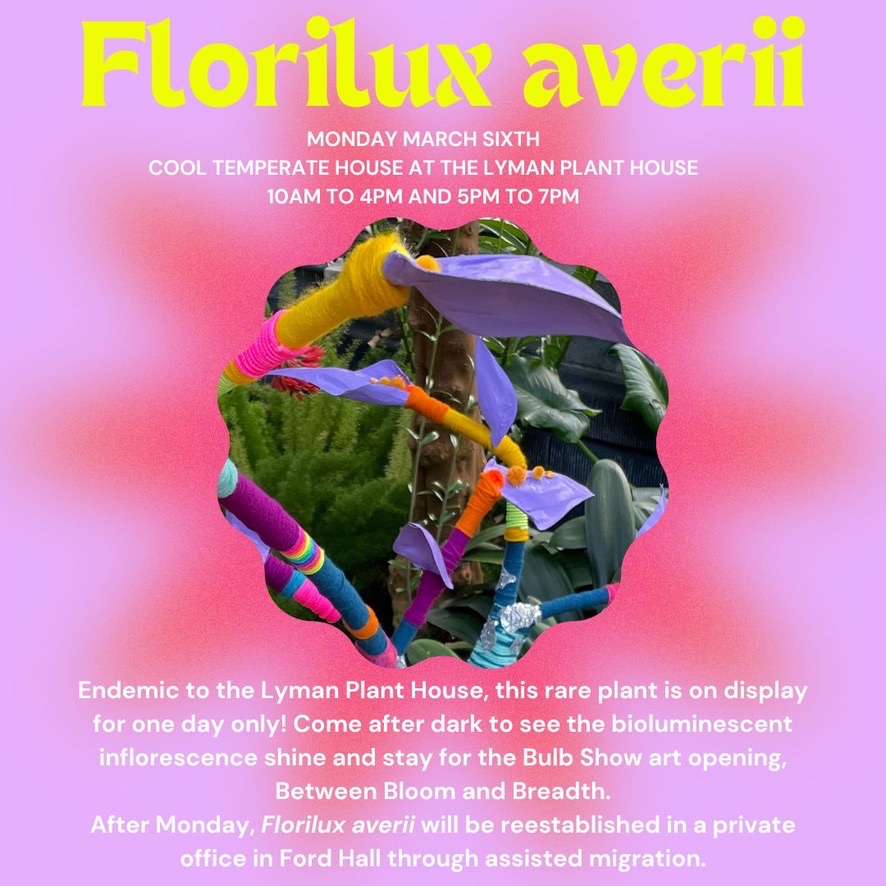
Florilux averii was a fabricated plant installed for a single day among the living collection at Lyman Conservatory at the Smith Botanic Garden, a space that prides itself on a meticulously maintained and scientifically important assemblage of real specimens. The work posed a quiet question: what belongs here, and who decides? By placing an undeniably artificial organism within the greenhouse—complete with terra cotta pot and real soil—the piece disrupted the boundary between the natural and the constructed, the sanctioned and the transgressive. Drawing on my training as a plant physiologist, I designed Florilux with careful attention to form, function, and habitat: in its imaginary ecology, the plant glows to attract nighttime pollinators, its luminous colors serving a purpose beyond ornament.
The name follows the tradition of naming newly discovered species after the scientist who first recorded them for western science, a colonialist practice now largely abandoned. In claiming this naming convention for a plant of my own making, Florilux averii becomes an act of self-inscription: a queer presence asserting its place within institutional space. The maximalist aesthetic—bold jewel tones, soft textures, flashy adornment—draws from the exuberant visual language of queer culture, where flamboyance is not excess but survival strategy, and visibility itself is a form of resistance. In this way, Florilux is both a disruption of the status quo and a strange self-portrait installed where it was never meant to grow.







 Avery Maltz